
Research review by the Worth Buying Canada team · Independent product-research team
Product links inspected October 4, 2026 · Research reviewed October 4, 2026 · How the evidence was assessed
Affiliate disclosure: This page contains affiliate links. We may earn a commission at no additional cost to you.
Best Portable Power Stations in Canada (2026)
A portable power station is useful only if it can run your equipment for long enough. This guide separates compact electronics batteries from appliance-capable stations and larger backup systems, so you can compare the power, capacity and carrying weight that matter for your own setup.
Quick choices
Start with the job: charging personal electronics, keeping a few essentials running, or planning a larger backup setup. The reviews explain where each option fits and what would make another model a better choice.
Availability and evidence: Purchase observations below are dated snapshots, not live stock promises. Some entries remain for comparison even where a previous offer was unavailable. This is a research guide based on published specifications and the evidence identified in each review; we have not conducted a head-to-head test.
Compare capacity, output and everyday use
Compare running power, stored energy and the practical compromise. The detailed reviews explain why similar-looking capacity figures can lead to different buying decisions.
| Product | Features explained | Who it suits | Before you buy | Where to buy |
|---|---|---|---|---|
 ProductEcoFlow DELTA 2 Reference mid-size optionRead the full review ↓ | Features explained 1,024Wh LFP (lithium iron phosphate battery chemistry); 1,800W rated AC output. | Who it suits The DELTA 2 is a middle-ground option for buyers whose loads have outgrown a compact station. Its 1,800W inverter offers more appliance headroom than the C300 or Explorer 500 v2, but the 1,024Wh battery still calls for a selective backup plan. Camping, outage essentials and tools. | Before you buy Capacity is not whole-home backup. | Where to buyView exact product on Amazon.ca Availability checked September 11, 2026: The exact Amazon.ca listing was in stock when checked. Seller, price, stock and delivery can change. |
 ProductEcoFlow DELTA 2 Max Reference expandable optionRead the full review ↓ | Features explained 2,048Wh LFP (lithium iron phosphate battery chemistry); 2,400W rated AC output. Expandable to 6kWh. | Who it suits The DELTA 2 Max is a capacity upgrade. Its 2,048Wh battery stores twice the nominal energy of the DELTA 2, while the 2,400W continuous output accommodates a larger combined load. Long outages and higher-draw appliances. | Before you buy Heavy and materially more expensive. | Where to buyView exact product on Amazon.ca Availability checked September 11, 2026: The exact Amazon.ca listing was in stock when checked. Seller, price, stock and delivery can change. |
 ProductJackery Explorer 1000 v2 Best-supported lightweight 1-kWh choiceRead the full review ↓ | Features explained 1,070Wh LFP (lithium iron phosphate battery chemistry); 1,500W rated AC output. | Who it suits The Explorer 1000 v2 suits buyers who want more reserve than a small electronics station without moving into a 2-kWh system. Its 1,500W continuous output is the deciding limit: compare your largest load with that rating before choosing it over the 1,800W options here. Camping and essential-circuit loads. | Before you buy Lower output ceiling than some 1-kWh rivals. | Where to buyView exact model at Jackery Canada Availability checked September 19, 2026: Jackery Canada showed the exact 1,070Wh / 1,500W model in stock. Amazon ASIN B0HFX3HT7H rendered the exact model today but a different Jackery bundle in the prior-day capture, so verify the model at checkout. |
 ProductAnker SOLIX C300 Best compact personal powerRead the full review ↓ | Features explained 288Wh LFP (lithium iron phosphate battery chemistry); 300W rated AC output. 600W surge; 140W two-way USB-C. 100W maximum solar input. | Who it suits The C300 is the compact choice for a laptop, phones, lights and networking equipment. Its appeal is a useful mix of ports in a 9.1lb package, not the ability to power a kitchen. The 300W continuous AC limit rules out most kettles, heaters and cooking appliances. Phones, laptops, networking gear, lights and other small electronics. | Before you buy The 300W continuous AC ceiling excludes most heating and cooking appliances. | Where to buyView exact product on Amazon.ca Availability checked September 11, 2026: The exact Amazon.ca listing was in stock when checked. Seller, price, stock and delivery can change. |
 ProductBLUETTI Elite 100 V2 Best-supported compact 1-kWh valueRead the full review ↓ | Features explained 1,024Wh LFP (lithium iron phosphate battery chemistry); 1,800W rated AC output. 3,600W surge; 1,200W AC input. Up to 1,000W solar input; 10ms UPS (uninterruptible power supply). | Who it suits The Elite 100 V2 puts a 1,800W inverter and 1,024Wh battery in a 25.3lb package. That makes it a flexible middle ground between the small electronics stations and the heavier 2-kWh options. Choose it for a mix of modest everyday loads and occasional higher-power tasks, rather than hours of electric heating. Camping, refrigeration and general outage essentials. | Before you buy Fixed 1,024Wh capacity drains quickly under sustained high-draw loads. | Where to buyView exact product on Amazon.ca Availability checked September 11, 2026: The exact Amazon.ca listing was in stock when checked. Seller, price, stock and delivery can change. |
 ProductEcoFlow DELTA 3 Plus Reference fast-transfer optionRead the full review ↓ | Features explained 1,024Wh LFP (lithium iron phosphate battery chemistry); 1,800W rated AC output; <10 ms UPS (uninterruptible power supply) claim. | Who it suits The DELTA 3 Plus remains a comparison option rather than a confirmed current purchase recommendation. Its 1,024Wh capacity and 1,800W output place it in the same broad load class as the DELTA 2; do not expect a large runtime increase simply from the newer name. Electronics, fridge and mobile work. | Before you buy Not every appliance tolerates every UPS (uninterruptible power supply) mode. | Where to buyView DELTA 3 Plus manufacturer details Availability update, October 4, 2026: EcoFlow Canada lists DELTA 3 Plus as sold out. The previous Amazon destination opened the standard DELTA 3 and has been removed. This Plus review remains a reference; choose another listed model if you need one now. |
 ProductEcoFlow DELTA Pro 3 Reference large-backup optionRead the full review ↓ | Features explained 4,096Wh LFP (lithium iron phosphate battery chemistry); 4,000W continuous AC output at 120/240V. Expandable. | Who it suits The DELTA Pro 3 is a different scale of purchase: 4,096Wh of storage and 4,000W continuous output at 120/240V. Consider it when smaller stations cannot meet the load or energy requirement, not merely because it has the largest numbers. Serious outage planning and RV loads. | Before you buy Cost, mass and transfer hardware planning. | Where to buyView exact product on Amazon.ca Availability checked September 11, 2026: The exact Amazon.ca listing was in stock when checked. Seller, price, stock and delivery can change. |
 ProductAnker SOLIX C2000 Gen 2 Expandable 2-kWh choiceRead the product recommendation ↓ | Features explained 2,048Wh LiFePO4 (lithium iron phosphate) battery; 2,400W rated / 4,000W peak output. Approximately 41.7 lb; optional expansion battery. | Who it suits The C2000 Gen 2 offers a 2,048Wh reserve and 2,400W rated output for buyers who need more energy than a 1-kWh station. At approximately 41.7lb, carrying it is a meaningful part of the buying decision. Larger camping loads and selected household backup appliances. | Before you buy Heavier than a compact station. Expansion battery and alternator charger are separate purchases; some remote Canadian addresses may not be served. | Where to buyView exact product on Amazon.ca Availability checked September 11, 2026: The exact Amazon.ca listing was in stock when checked. Seller, price, stock and delivery can change. |
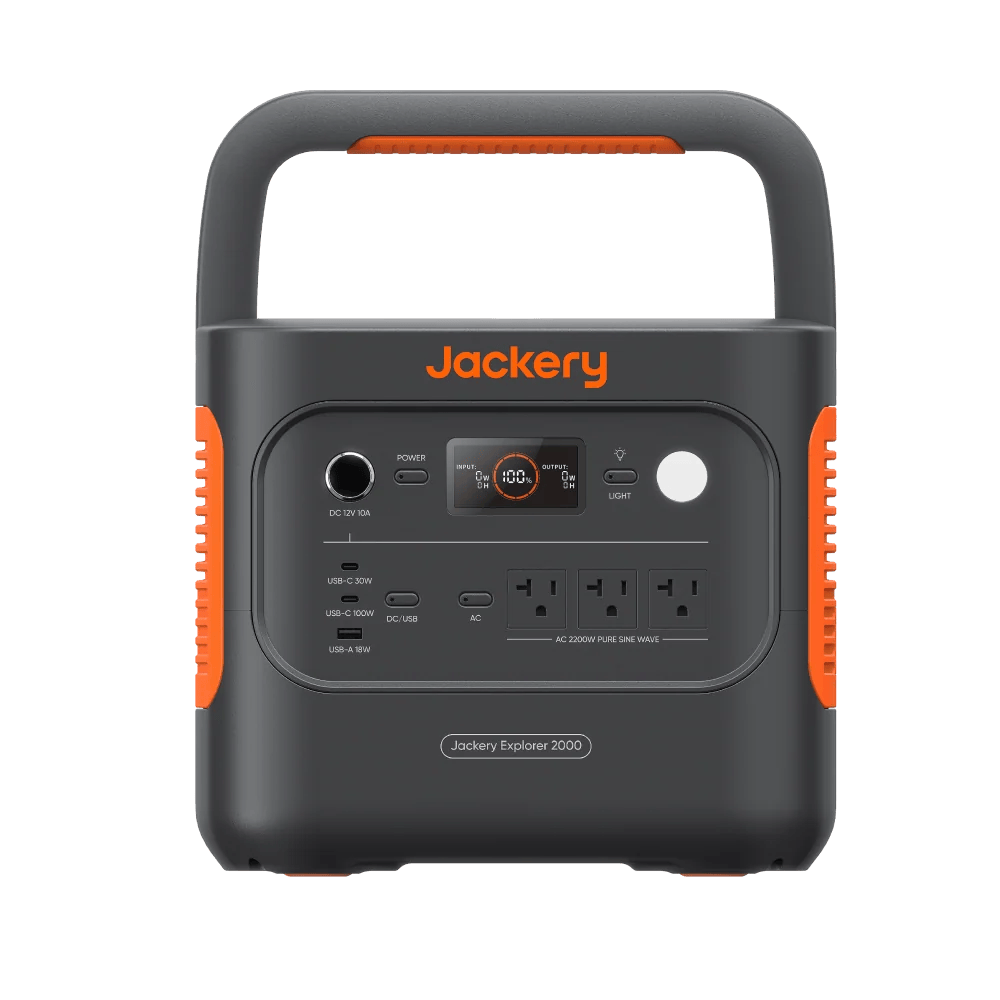 ProductJackery Explorer 2000 v2 Best large Jackery portableRead the full review ↓ | Features explained 2,042Wh LFP (lithium iron phosphate battery chemistry); 2,200W rated AC output. | Who it suits The Explorer 2000 v2 offers 2,042Wh of stored energy with 2,200W continuous output. It is a better fit for extending essential-load runtime than for running a high-power appliance continuously. Multi-day essentials and RV use. | Before you buy Not a substitute for installed whole-home backup. | Where to buyView exact product on Amazon.ca Availability checked September 11, 2026: The exact Amazon.ca listing was in stock when checked. Seller, price, stock and delivery can change. |
 ProductBLUETTI EB3A Best compact high-output valueRead the full review ↓ | Features explained 268Wh LFP (lithium iron phosphate battery chemistry); 600W rated AC output. 1,200W surge. | Who it suits The EB3A favours short, higher-power jobs over long runtime. Its 600W inverter has more continuous output than the C300, but its 268Wh battery stores slightly less energy. That is useful only if the extra output matches a task you actually need. Short high-output tasks and electronics. | Before you buy Small energy reserve despite 600 W inverter. | Where to buyView exact product on Amazon.ca Availability checked September 11, 2026: The exact Amazon.ca listing was in stock when checked. Seller, price, stock and delivery can change. |
 ProductBLUETTI AC70 Best 768-Wh valueRead the full review ↓ | Features explained 768Wh LFP (lithium iron phosphate battery chemistry); 1,000W rated AC output. 1,500W surge. | Who it suits The AC70 occupies a middle position: more energy and output than the smallest stations, without reaching the 1-kWh class. Its 768Wh battery and 1,000W continuous output make it worth comparing when a compact unit is too restrictive but a larger one is unnecessary. Mid-size camping and brief outages. | Before you buy Runtime below 1-kWh class. | Where to buyView exact product on Amazon.ca Availability checked September 11, 2026: The exact Amazon.ca listing was in stock when checked. Seller, price, stock and delivery can change. |
 ProductJackery Explorer 500 v2 Compact 512Wh camping optionRead the product recommendation ↓ | Features explained 512Wh LiFePO4 (lithium iron phosphate) battery; 500W rated / 1,000W surge AC output. Two AC outlets; AC cable included. | Who it suits The Explorer 500 v2 sits between pocket-sized electronics power and a full 1-kWh station. Its 512Wh battery and 500W rated output suit buyers who want more reserve than the C300 without paying for a much larger inverter. Phones, laptops, lights and suitable low-power camping equipment. | Before you buy 500W rated output excludes most kettles and space heaters. Solar panel sold separately; check delivery timing. | Where to buyView exact product on Amazon.ca Availability checked September 11, 2026: The exact Amazon.ca listing was in stock when checked. Seller, price, stock and delivery can change. |
 ProductEcoFlow DELTA 3 1000 Air Reference low-draw 960Wh optionRead the full review ↓ | Features explained 960Wh LFP (lithium iron phosphate battery chemistry); 500W rated AC output; 1,000W surge; <10 ms UPS (uninterruptible power supply) claim. | Who it suits The DELTA 3 1000 Air combines a relatively large 960Wh energy reserve with a modest 500W continuous AC limit. It is better suited to sustaining low-draw equipment than powering high-wattage appliances. Low-draw outage and desk backup. | Before you buy 500W continuous AC ceiling. | Where to buyView exact product on Amazon.ca Availability checked September 11, 2026: The exact Amazon.ca listing was in stock when checked. Seller, price, stock and delivery can change. |
 ProductEcoFlow DELTA 3 Classic Reference 1-kWh optionRead the full review ↓ | Features explained 1,024Wh LFP (lithium iron phosphate battery chemistry); 1,800W rated AC output. 3,600W surge; 10 ms UPS (uninterruptible power supply) claim. | Who it suits The DELTA 3 Classic belongs on the shortlist when you need roughly 1-kWh of storage and 1,800W of continuous output. It overlaps closely with the DELTA 2 on those core figures, so the better purchase depends on the complete offer and the features you will use. General-purpose portable power. | Before you buy Feature set is leaner than Plus. | Where to buyView exact product on Amazon.ca Availability checked September 11, 2026: The exact Amazon.ca listing was in stock when checked. Seller, price, stock and delivery can change. |
 ProductEcoFlow DELTA 3 Max 2-kWh home-backup optionRead the product recommendation ↓ | Features explained 2,048Wh LiFePO4 (lithium iron phosphate) battery; 2,400W rated AC output. Advertised 0–80% recharge in 1.13 hours. | Who it suits The DELTA 3 Max is for buyers who need a 2-kWh reserve and 2,400W of continuous output but are not looking for the much larger DELTA Pro 3. This review covers the standard Max, not Max Plus. Home backup and RV use within the inverter rating. | Before you buy X-Boost is not the same as rated AC output. Check appliance compatibility and startup demand. | Where to buyView exact product on Amazon.ca Availability checked September 11, 2026: The exact Amazon.ca listing was in stock when checked. Seller, price, stock and delivery can change. |
How we selected and ranked
We compare what each station can power, how much energy it stores, how it recharges and how practical it is to move. The table is a specification comparison, not a tested performance ranking. Independent test findings are identified where available; specifications alone do not establish owner satisfaction or long-term reliability.
Detailed recommendations
Pick 1 · Best-supported lightweight 1-kWh choice
1. Jackery Explorer 1000 v2 — Best-supported lightweight 1-kWh choice
Our take: The Explorer 1000 v2 suits buyers who want more reserve than a small electronics station without moving into a 2-kWh system. Its 1,500W continuous output is the deciding limit: compare your largest load with that rating before choosing it over the 1,800W options here.
What you gain: The 1,070Wh battery offers a little more nominal energy than the 1,024Wh models in this guide. That small difference should not outweigh outlet needs, charging speed or the ability to run your equipment. Choose it for the complete package, not the capacity number alone.
Canadian availability checked September 19, 2026: Jackery Canada showed the exact E1000v2 (1,070Wh / 1,500W) in stock. Amazon ASIN B0HFX3HT7H rendered the exact E1000v2 today but a different Jackery bundle in the prior-day capture, so the official Canadian page is the primary destination and any retailer variation must be verified before checkout.
Evidence record (September 9, 2026): OutdoorGearLab (July 23, 2026) measured 910Wh delivered energy, 85% usable capacity, 24.4lb weight and a 1.58-hour recharge. TechRadar Pro separately used the exact model for field, workshop and UPS tests.
Choose something else if: You need more than 1,500W continuously, more solar-input headroom or more outlets. The Elite 100 V2 and DELTA 2 have higher rated output, while the 2-kWh choices offer substantially more stored energy. Those are different upgrades: one widens the range of loads; the other can extend runtime.
Safety and care: Keep units dry and ventilated, use only rated charging equipment, and never connect a portable power station to household wiring except through code-compliant transfer equipment installed by a qualified electrician.
Independent evidence: OutdoorGearLab (July 23, 2026) and TechRadar Pro each conducted an exact-model hands-on test; their findings support good portability and usable output while identifying charging speed, solar input and outlet-count limits.
Product and source links: Jackery Canada specifications and primary purchase destination; OutdoorGearLab exact-model test (July 23, 2026); TechRadar Pro exact-model field and workshop test; Amazon.ca ASIN B0HFX3HT7H — verify the rendered variation before ordering.
Pick 2 · Best compact personal power
2. Anker SOLIX C300 — Best compact personal power
Our take: The C300 is the compact choice for a laptop, phones, lights and networking equipment. Its appeal is a useful mix of ports in a 9.1lb package, not the ability to power a kitchen. The 300W continuous AC limit rules out most kettles, heaters and cooking appliances.
Published specifications in context: Anker specifies a 288Wh LFP battery, 300W continuous AC output, 600W surge, 140W two-way USB-C, up to 100W solar input and a transfer time under 10ms. The AC model’s many ports make it flexible, but all AC outlets still share the same 300W ceiling.
Canadian availability checked September 11, 2026: The exact AC model A1722 was in stock on Amazon.ca when checked. Confirm the model, seller and delivery details before ordering.
Scientific interpretation: CHIP’s March 3, 2026 bench test measured 240Wh delivered through AC, 266Wh through USB-C and 254Wh through the 12V outlet, versus the 288Wh nominal capacity. The same test measured a 1-hour-9-minute full recharge. Those results demonstrate why real delivered energy depends on the output path and conversion losses.
Independent evidence: CHIP bench-tested the exact model and published delivered-energy, recharge-time and maximum-output measurements.
Product and source links: Anker SOLIX C300 specifications · CHIP exact-model bench test
Pick 3 · Best-supported compact 1-kWh value
3. BLUETTI Elite 100 V2 — Best-supported compact 1-kWh value
Our take: The Elite 100 V2 puts a 1,800W inverter and 1,024Wh battery in a 25.3lb package. That makes it a flexible middle ground between the small electronics stations and the heavier 2-kWh options. Choose it for a mix of modest everyday loads and occasional higher-power tasks, rather than hours of electric heating.
Published specifications in context: BLUETTI specifies 1,024Wh, 1,800W continuous output, up to 3,600W surge, 1,200W AC input, 0–80% charging in 45 minutes, up to 1,000W solar input at 12–60V/20A and a 10ms UPS transfer claim. Surge and power-lifting modes do not increase the continuous 1,800W rating.
Canadian availability checked September 11, 2026: The exact Elite 100 V2 listing was in stock on Amazon.ca from BLUETTI’s seller account when checked. Confirm the seller, package and delivery before ordering.
The trade-off: Its fixed battery capacity matters more than the high output figure during a long outage. A steady 1,000W load would use the nominal 1,024Wh in just over an hour even before losses. If duration is the priority, compare the 2-kWh stations instead of buying on inverter power alone.
Independent evidence: TechRadar’s September 9, 2025 exact-model test charged at 1,200W, ran a rice cooker, hair dryer and air fryer, found a sustained 2,000W induction load beyond the unit’s limit and verified UPS switchover with a roughly 200W office load.
Product and source links: BLUETTI Canada Elite 100 V2 specifications · TechRadar exact-model hands-on review
Pick 4 · Reference mid-size option
4. EcoFlow DELTA 2 — Reference mid-size option
Our take: The DELTA 2 is a middle-ground option for buyers whose loads have outgrown a compact station. Its 1,800W inverter offers more appliance headroom than the C300 or Explorer 500 v2, but the 1,024Wh battery still calls for a selective backup plan.
Where it fits: Prioritize refrigeration, lights, networking and electronics rather than trying to run everything at once. Check startup demand as well as running power; a compatible running wattage alone does not guarantee that a motor will start.
Canadian availability checked September 8, 2026: An exact standalone Amazon.ca listing was in stock on September 8, 2026. Stock, seller and delivery estimates can change; check the listing before ordering.
Runtime in perspective: At a steady 100W, 1,024Wh gives a theoretical ceiling of 10.24 hours before losses. At 1,500W, the same calculation falls below 41 minutes. These are calculations, not measured runtimes, and show why space heating is a poor use of a limited battery reserve.
When to step up: Choose the DELTA 2 Max or another 2-kWh model if your main problem is duration. Choose a smaller station if you only need USB devices and light loads. Paying for inverter capacity you never use does not make a backup plan better.
Independent evidence: No named, qualifying exact-model hands-on test is documented.
Product and source links: View on Amazon.ca
Pick 5 · Reference expandable option
5. EcoFlow DELTA 2 Max — Reference expandable option
Our take: The DELTA 2 Max is a capacity upgrade. Its 2,048Wh battery stores twice the nominal energy of the DELTA 2, while the 2,400W continuous output accommodates a larger combined load.
Why consider it: Expansion to 6kWh offers a path to more stored energy without replacing the main station. Price the batteries you would actually need: the standalone unit does not include the full expanded capacity.
Canadian availability checked September 8, 2026: An exact standalone Amazon.ca listing was in stock on September 8, 2026. Stock, seller and delivery estimates can change; check the listing before ordering.
The compromise: More capacity brings a larger, heavier and more expensive setup. It makes sense when the station will mostly stay near its backup loads. For frequent carrying between a car and campsite, compare the smaller 1-kWh options before committing to expansion.
Independent evidence: No named, qualifying exact-model hands-on test is documented.
Product and source links: View on Amazon.ca
Pick 6 · Reference fast-transfer option
6. EcoFlow DELTA 3 Plus — Reference fast-transfer option
Our take: The DELTA 3 Plus remains a comparison option rather than a confirmed current purchase recommendation. Its 1,024Wh capacity and 1,800W output place it in the same broad load class as the DELTA 2; do not expect a large runtime increase simply from the newer name.
What to compare: Check the exact Plus model’s charging, connections and backup-transfer specification against your equipment. Similar DELTA 3 names do not mean identical features, and the standard model must not be substituted under this review.
Canadian availability checked September 8, 2026: An exact standalone Amazon.ca listing was in stock on September 8, 2026. Stock, seller and delivery estimates can change; check the listing before ordering.
Availability update, October 4, 2026: EcoFlow Canada currently lists DELTA 3 Plus as sold out. The previous Amazon link opened the standard DELTA 3, whose specifications and owner evidence are different. We have removed that purchase destination and retained the exact Plus manufacturer page for reference. Choose another listed option if you need a station now.
Before choosing it: Resolve availability first, then check compatibility with any device that must stay on during a power interruption. A portable station’s backup mode is not an assurance that every sensitive device will remain running.
Independent evidence: No named, qualifying exact-model hands-on test is documented.
Product and source links: View DELTA 3 Plus manufacturer details
Pick 7 · Reference low-draw 960Wh option
7. EcoFlow DELTA 3 1000 Air — Reference low-draw 960Wh option
Our take: The DELTA 3 1000 Air combines a relatively large 960Wh energy reserve with a modest 500W continuous AC limit. It is better suited to sustaining low-draw equipment than powering high-wattage appliances.
The important distinction: Its capacity is close to the 1-kWh stations here, but its inverter is not in the same class as their 1,800W outputs. A buyer focused on routers, laptops and lighting may value the reserve; a buyer planning cooking or power-tool loads should look elsewhere.
Canadian availability checked September 8, 2026: An exact standalone Amazon.ca listing was in stock on September 8, 2026. Stock, seller and delivery estimates can change; check the listing before ordering.
Do not size loads from surge: The 1,000W surge figure is not a continuous allowance. Keep the combined running load within 500W and check the requirements of each device before relying on it for backup.
Independent evidence: No named, qualifying exact-model hands-on test is documented.
Product and source links: View on Amazon.ca
Pick 8 · Reference 1-kWh option
8. EcoFlow DELTA 3 Classic — Reference 1-kWh option
Our take: The DELTA 3 Classic belongs on the shortlist when you need roughly 1-kWh of storage and 1,800W of continuous output. It overlaps closely with the DELTA 2 on those core figures, so the better purchase depends on the complete offer and the features you will use.
What the figures mean: The 1,024Wh battery is the energy reserve; the 1,800W rating is the running-power limit. The 3,600W surge and advertised 10ms transfer time answer separate questions and should not be treated as extra continuous output or a universal UPS guarantee.
Canadian availability checked September 8, 2026: An exact standalone Amazon.ca listing was in stock on September 8, 2026. Stock, seller and delivery estimates can change; check the listing before ordering.
How to decide: Compare charging inputs, ports, expansion compatibility and warranty for the exact package. A newer generation name is not enough reason to pay more if it does not improve your intended setup.
Independent evidence: No named, qualifying exact-model hands-on test is documented.
Product and source links: View on Amazon.ca
Pick 9 · 2-kWh home-backup option
9. EcoFlow DELTA 3 Max
Our take: The DELTA 3 Max is for buyers who need a 2-kWh reserve and 2,400W of continuous output but are not looking for the much larger DELTA Pro 3. This review covers the standard Max, not Max Plus.
Published specifications: 2,048Wh LiFePO4 battery; 2,400W rated AC output; advertised 0–80% recharge in 1.13 hours.
Why it may suit you: Its nominal capacity is twice that of a 1,024Wh station. At the same load, that is a meaningful increase in the energy budget, although actual runtime still depends on losses and the equipment connected.
The limit: Use 2,400W for continuous-load planning. X-Boost is not the same as rated output, and a motor’s startup requirement may be higher than its running demand. Confirm the exact model’s connections before planning an RV or household setup.
Offer checked: September 8, 2026. Confirm the seller, package and delivery estimate before ordering.
Pick 10 · Reference large-backup option
10. EcoFlow DELTA Pro 3 — Reference large-backup option
Our take: The DELTA Pro 3 is a different scale of purchase: 4,096Wh of storage and 4,000W continuous output at 120/240V. Consider it when smaller stations cannot meet the load or energy requirement, not merely because it has the largest numbers.
Plan the whole system: The station, any expansion batteries and approved household-transfer equipment are separate parts of the decision. A high-output portable battery does not automatically provide a safe connection to household circuits.
Canadian availability checked September 8, 2026: An exact standalone Amazon.ca listing was in stock on September 8, 2026. Stock, seller and delivery estimates can change; check the listing before ordering.
Capacity still has a limit: A steady 1,000W load would consume 4,096Wh in about 4.1 hours before losses. Longer outages need a realistic recharge plan as well as enough initial battery capacity.
The compromise: Cost, size, weight and installation planning matter more here than they do for a campsite battery. If you only need phones, lighting and a few electronics, a smaller station is easier to justify and move.
Independent evidence: No named, qualifying exact-model hands-on test is documented.
Product and source links: View on Amazon.ca
Pick 11 · Expandable 2-kWh choice
11. Anker SOLIX C2000 Gen 2
Our take: The C2000 Gen 2 offers a 2,048Wh reserve and 2,400W rated output for buyers who need more energy than a 1-kWh station. At approximately 41.7lb, carrying it is a meaningful part of the buying decision.
Published specifications: 2,048Wh LiFePO4 battery; 2,400W rated / 4,000W peak output; approximately 41.7 lb; optional expansion battery.
Where it earns its place: Compare it with the DELTA 2 Max and DELTA 3 Max for a larger camping or selected-appliance backup setup. Their headline capacity is similar; the ports, recharge arrangement and complete package should decide the choice.
Price the complete setup: The expansion battery and alternator charger are separate purchases. Check Canadian delivery coverage as well as the cost of any accessories you need, rather than comparing a bare station with another brand’s bundle.
Offer checked: September 8, 2026. Confirm the seller, package and delivery estimate before ordering.
Pick 12 · Best large Jackery portable
12. Jackery Explorer 2000 v2 — Best large Jackery portable
Our take: The Explorer 2000 v2 offers 2,042Wh of stored energy with 2,200W continuous output. It is a better fit for extending essential-load runtime than for running a high-power appliance continuously.
How it compares: Its nominal energy is close to the 2,048Wh models here; that small capacity difference is not a useful tie-breaker. The lower 2,200W output limit, required ports and charging setup matter more for deciding whether it suits your equipment.
Canadian availability checked September 8, 2026: Jackery Canada displayed Add to cart and Buy it now for the exact station.
The practical limit: At a continuous 2,200W load, the nominal capacity would last less than an hour even before losses. Use the output headroom for appropriate intermittent loads, and plan the average demand around the duration you need.
Independent evidence: No named, qualifying exact-model hands-on test is documented.
Product and source links: View on Amazon.ca
Pick 13 · Compact 512Wh camping option
13. Jackery Explorer 500 v2
Our take: The Explorer 500 v2 sits between pocket-sized electronics power and a full 1-kWh station. Its 512Wh battery and 500W rated output suit buyers who want more reserve than the C300 without paying for a much larger inverter.
Published specifications: 512Wh LiFePO4 battery; 500W rated / 1,000W surge AC output; two AC outlets; AC cable included.
Where it fits: Phones, laptops, lights and compatible low-power camping equipment are the sensible starting point. It stores more nominal energy than the 268Wh EB3A, but the EB3A has a higher 600W continuous rating: capacity and output do not rise together.
Check the version: This is the 512Wh LiFePO4 Explorer 500 v2, not the older 518Wh Explorer 500. Most kettles and space heaters exceed its 500W running limit, and the 1,000W surge rating does not change that. A solar panel is a separate purchase.
Offer checked: September 8, 2026. Confirm the seller, package and delivery estimate before ordering.
Pick 14 · Best compact high-output value
14. BLUETTI EB3A — Best compact high-output value
Our take: The EB3A favours short, higher-power jobs over long runtime. Its 600W inverter has more continuous output than the C300, but its 268Wh battery stores slightly less energy. That is useful only if the extra output matches a task you actually need.
Why choose it: A compatible device drawing more than 300W but no more than 600W may fit the EB3A where it would exceed the C300’s rating. Check startup requirements too; this is not a blanket assurance that any appliance below 600W will work.
Canadian availability checked September 8, 2026: BLUETTI Canada displayed the standalone station for purchase.
The trade-off: At a steady 500W, the nominal battery holds roughly 32 minutes of energy before losses. For long sessions with low-draw electronics, compare capacity and the available ports rather than assuming the larger inverter means longer endurance.
Independent evidence: No named, qualifying exact-model hands-on test is documented.
Product and source links: View on Amazon.ca
Pick 15 · Best 768-Wh value
15. BLUETTI AC70 — Best 768-Wh value
Our take: The AC70 occupies a middle position: more energy and output than the smallest stations, without reaching the 1-kWh class. Its 768Wh battery and 1,000W continuous output make it worth comparing when a compact unit is too restrictive but a larger one is unnecessary.
How it compares: It has 25% less nominal stored energy than a 1,024Wh station. The 1,000W inverter also sets a lower load ceiling than the 1,800W models, so judge the savings against both runtime and appliance compatibility.
Canadian availability checked September 8, 2026: BLUETTI Canada displayed Add to cart and Buy Now for the standalone station.
Choose it for the right compromise: It can make sense for moderate camping loads or brief interruptions. If the difference in price and carrying weight is small, a 1-kWh option may better suit longer use; if your loads are all small, a compact station may be enough.
Independent evidence: No named, qualifying exact-model hands-on test is documented.
Product and source links: View on Amazon.ca
Work out your energy budget before choosing a size
Make a short list of the equipment you need, its average power demand and the hours you want it to run. Multiply watts by hours, then add the results. This gives the energy your devices need, not the battery capacity you should buy.
Illustrative example: A 15W router for eight hours uses 120Wh; a 50W laptop for four hours uses 200Wh; and a 10W light for five hours uses 50Wh. Together they need 370Wh. These are example loads, not measurements of your equipment or a test of any station.
A 370Wh battery would leave no allowance for conversion losses, the station’s own consumption or extra usage. The 268Wh EB3A and 288Wh C300 fall below this example’s device-energy requirement even before losses. A larger station is worth considering, but confirm usable energy and leave a reserve rather than treating the calculation as a runtime guarantee.
Check power separately. Devices that run at the same time must stay within the station’s continuous limit, and motors may need extra power to start. For a refrigerator, use a measured or documented energy requirement rather than assuming its running wattage stays constant all day. Charging access and carrying weight can then decide between stations that meet both limits.
Canadian cold-weather and outage rules
- Do not charge a frozen battery unless the manufacturer explicitly allows it: lithium cells often have stricter low-temperature charging limits than discharge limits.
- Keep the station indoors in a dry conditioned space when possible: unlike a fuel generator, a battery station produces no combustion exhaust at the point of use.
- Plan average watts, not just peak watts: runtime is driven by energy consumed over time.
- Solar input is weather-dependent: short winter days, snow cover and low sun angle can greatly reduce daily recharge energy.
- Household wiring requires approved transfer equipment: never backfeed a panel with a portable station.
What this comparison can tell you
Use the specifications to rule out unsuitable loads and compare energy reserves. Where a review identifies an independent test, its results apply to that test setup, not every appliance or package. This guide does not establish a long-term reliability ranking for all 15 models.